
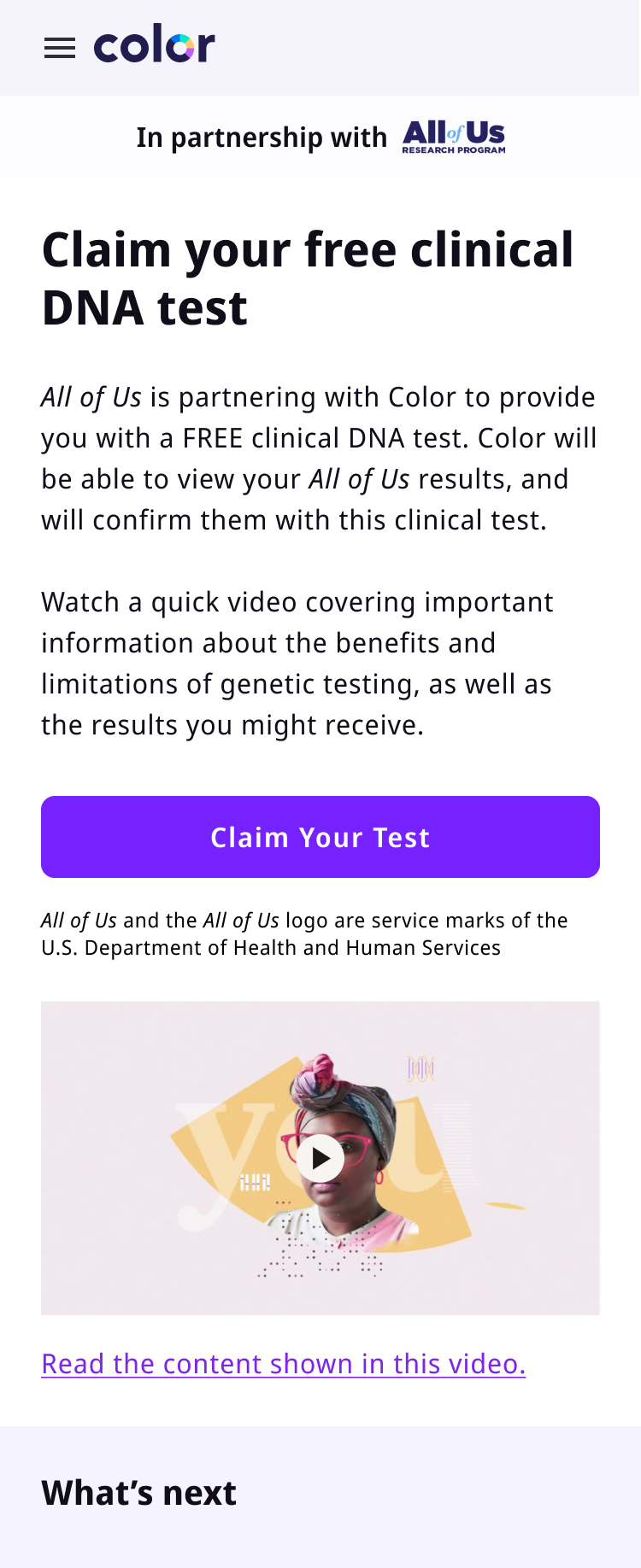
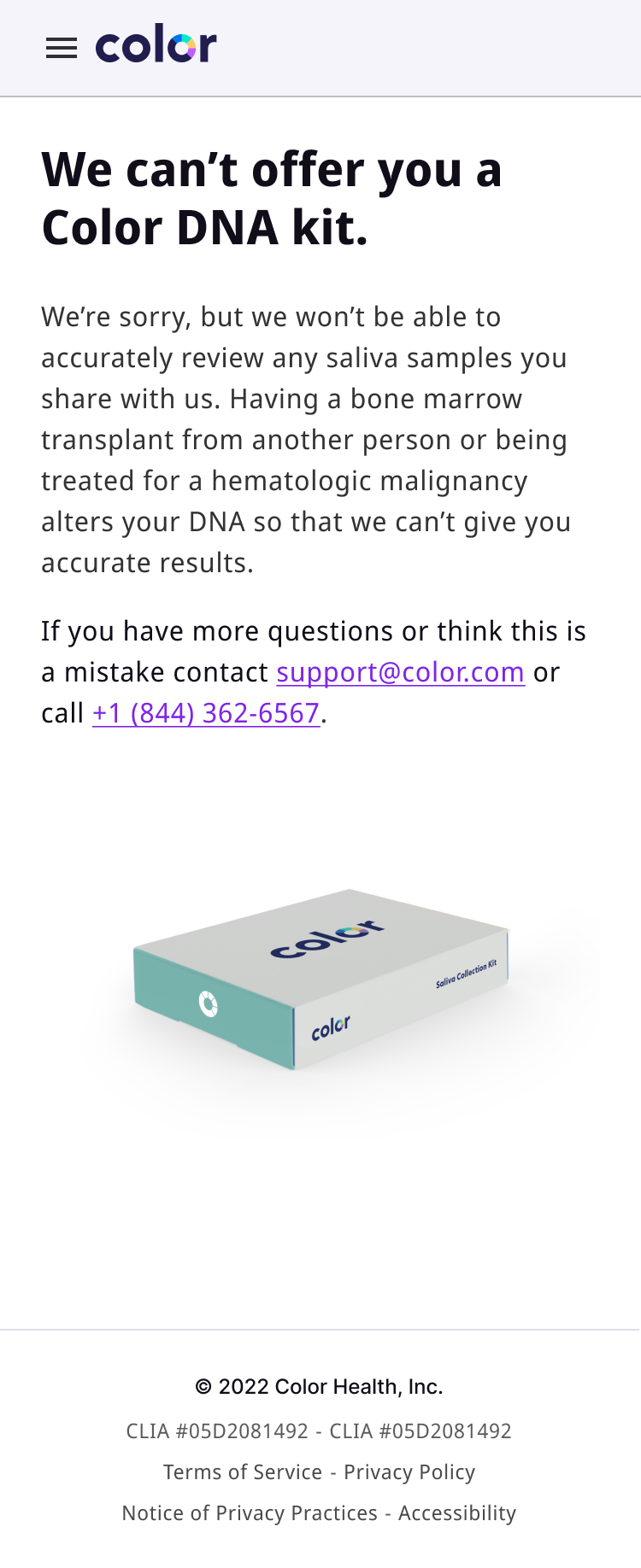
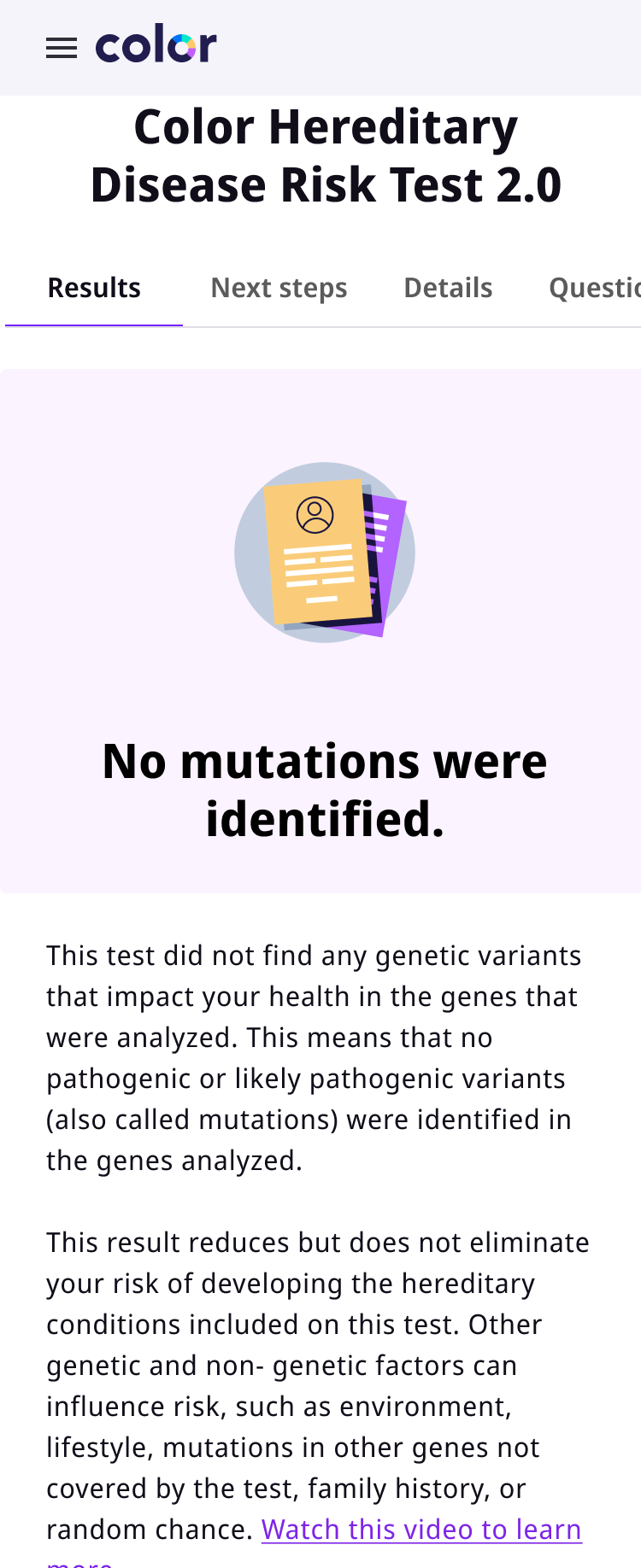
I led the design for a clinical genetic report in partnership with the National Institutes of Health (NIH) to create a product that generated $16.8M in revenue for the business I worked at, Color, a company in the genomics space. This product would reached over 1 miliion participants, 80% of whom are underrepresented in biomedical research.

This would turn out to be Color's largest contract at the time. A product that would prove Color could serve enterprise-scale government partners & generate millions in revenue for the business.

This product would be used by 1 million+ participants, many from communities historically excluded from medical research. For participants with positive results, this report would be the basis for life-altering medical decisions.

As the Lead product designer, I owned the end-to-end experience architecture across 7 user flows, led cross-functional alignment between Color, NIH, & the All of Us Research Program. Through it, I expanded the design system with new components & drove accessibility standards for a diverse, medically underserved population.
Product Manager
Project Managers
Engineers
Content Strategist
Product Designers
User researchers
Genetic Counselors
Here are the 3 main constraints that shpaed every decision I we made as a team, my role was to design an intentional & impactful solution within this complex space.
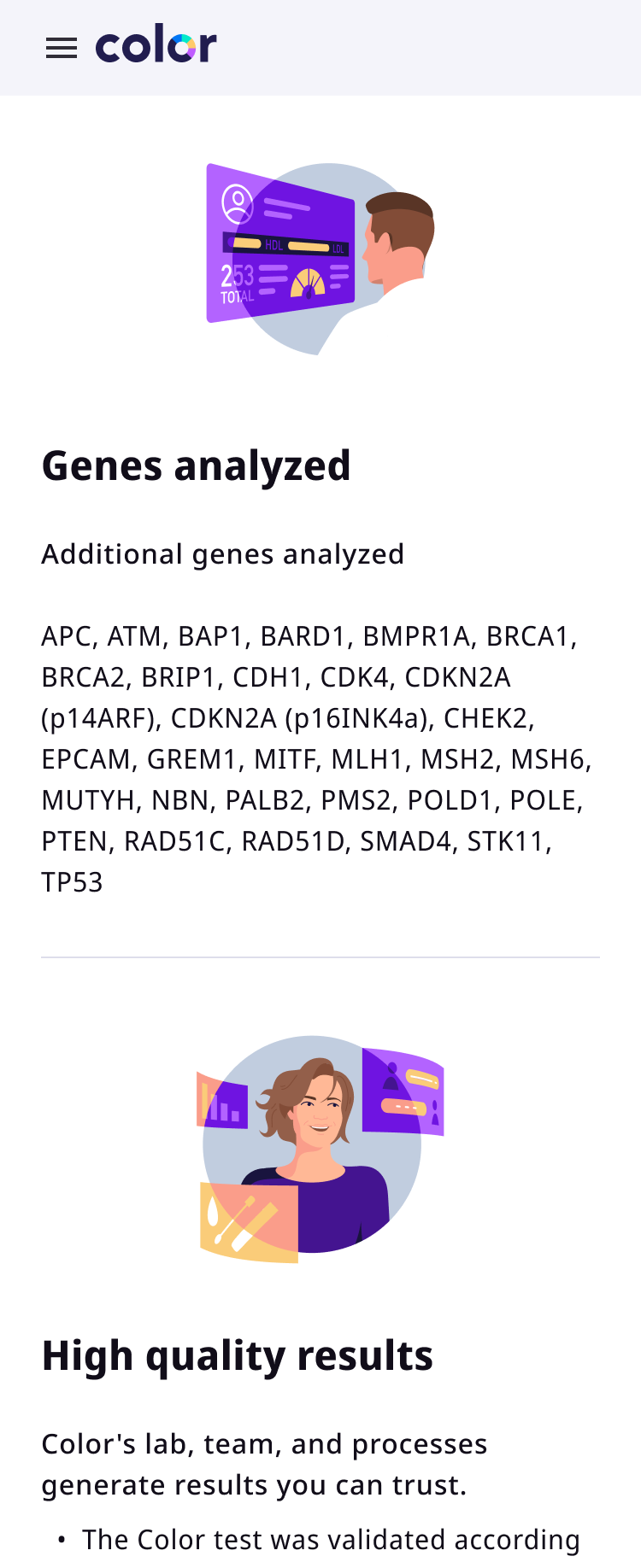
Color had always broken results into 3 separate reports. NIH required one. No one had designed a single report for this many genes across this many conditions.
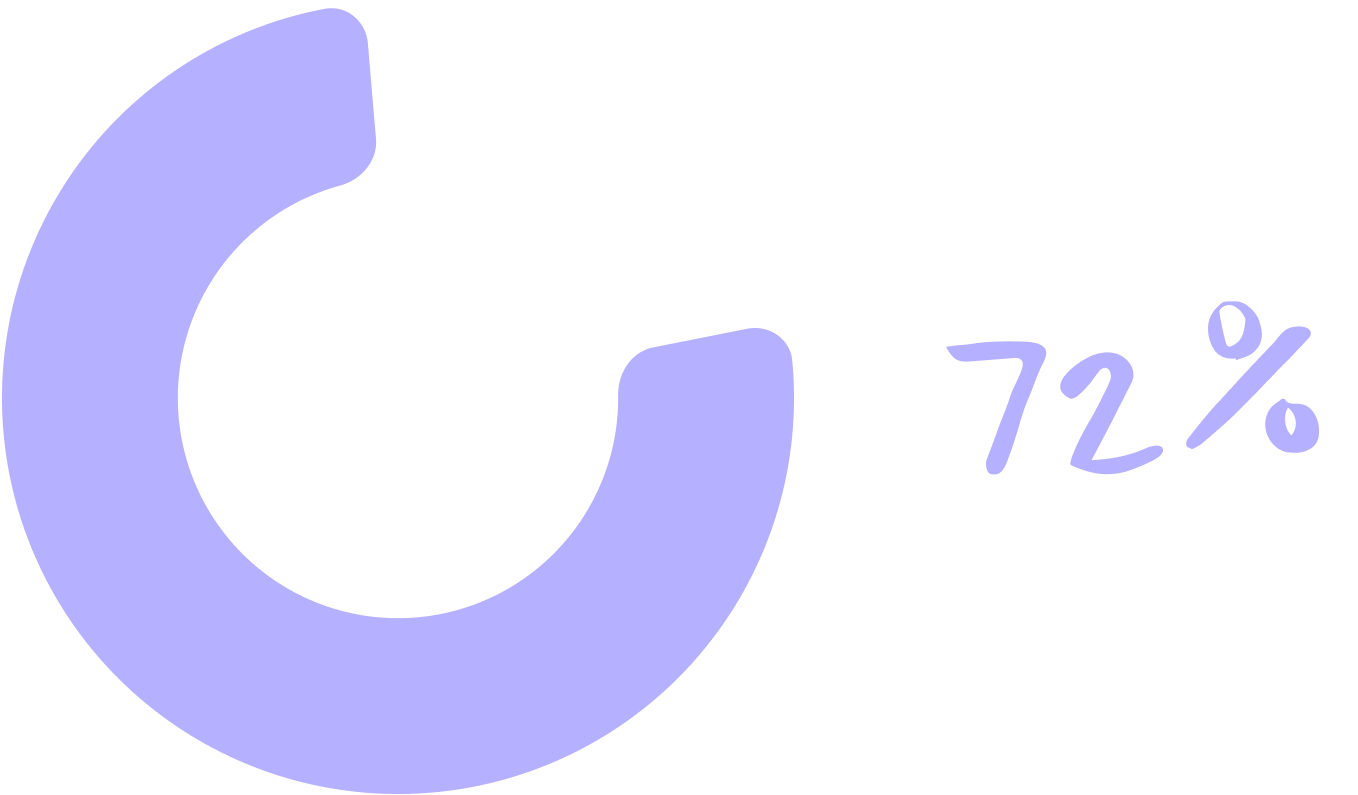
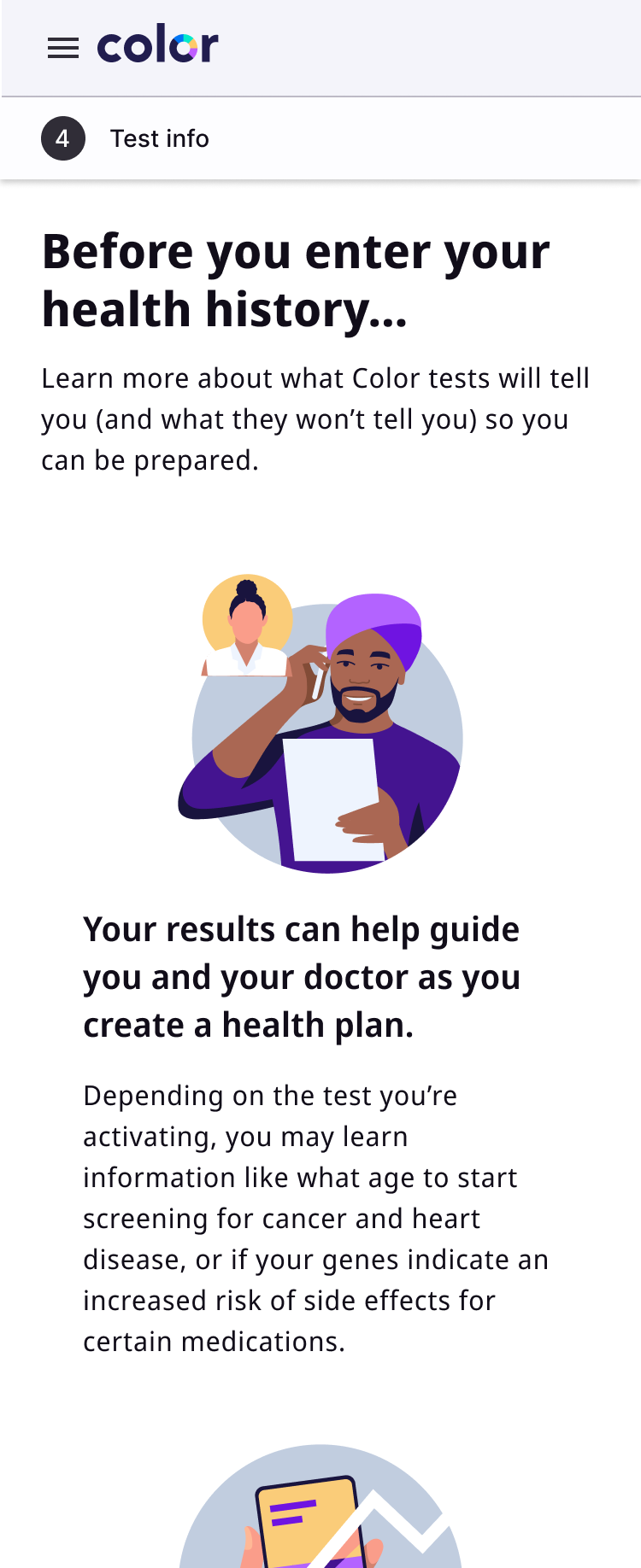
I designed for 72%+ mobile-first, 7th grade average reading level, non-native English speakers. Many from communities with deep justified mistrust of medical institutions.

Every design decision had to satisfy both Color's internal requirements and NIH's clinical/regulatory requirements. I was the person translating between those worlds.
I ran cognitive walkthroughs of Color's existing reports with PMs & conducted interviews with clinicians. But the most important insight came from understanding who our users actually were. For this I collaborated with researchers to understand our our population might navigate & understand our existing genetic products.


The current genetics content was written at a 12th grade reading level while patients read at a 7th grade level. This shifted my strategy to fundamentally redesigning how genetic data is presented with a content design partner.

Participants didn't want a passive report. They wanted to make medical decisions, share results with providers, and talk to family. This reframed the product from 'information display' to 'decision-enablement tool.
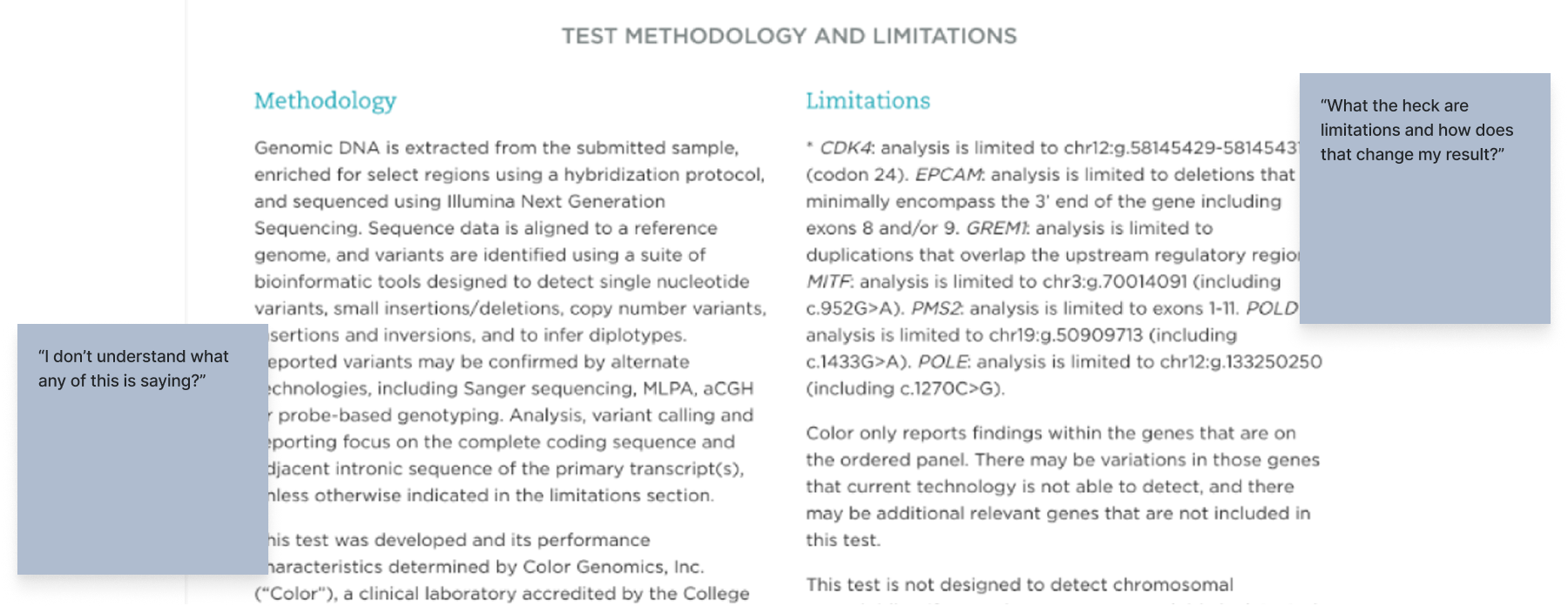
Information density was causing patients to disengage. Rather than showing everything at once, I needed to give patients control over their information depth.
These insights led to three deliberate strategic choices that shaped every design decision downstream as I simultaneously tried to comprehend this complex genetic information myself.

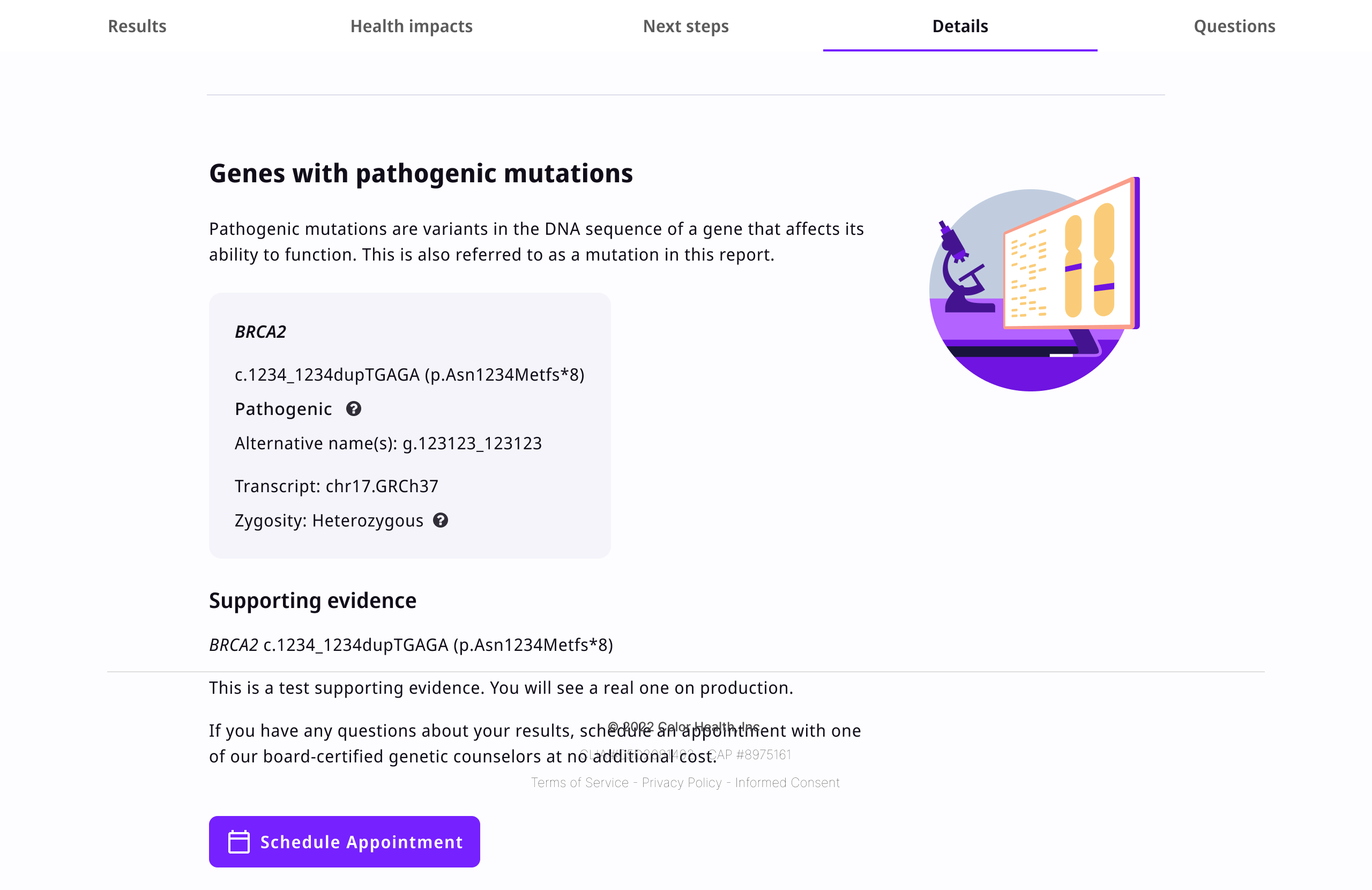
Before touching any visual design, I spent weeks with genetic counselors mapping every edge case: single mutations, multiple mutations, double mutations, additional findings. I built the IA structure and aligned all stakeholders on it before designing a single screen. This is the work that made everything else possible.

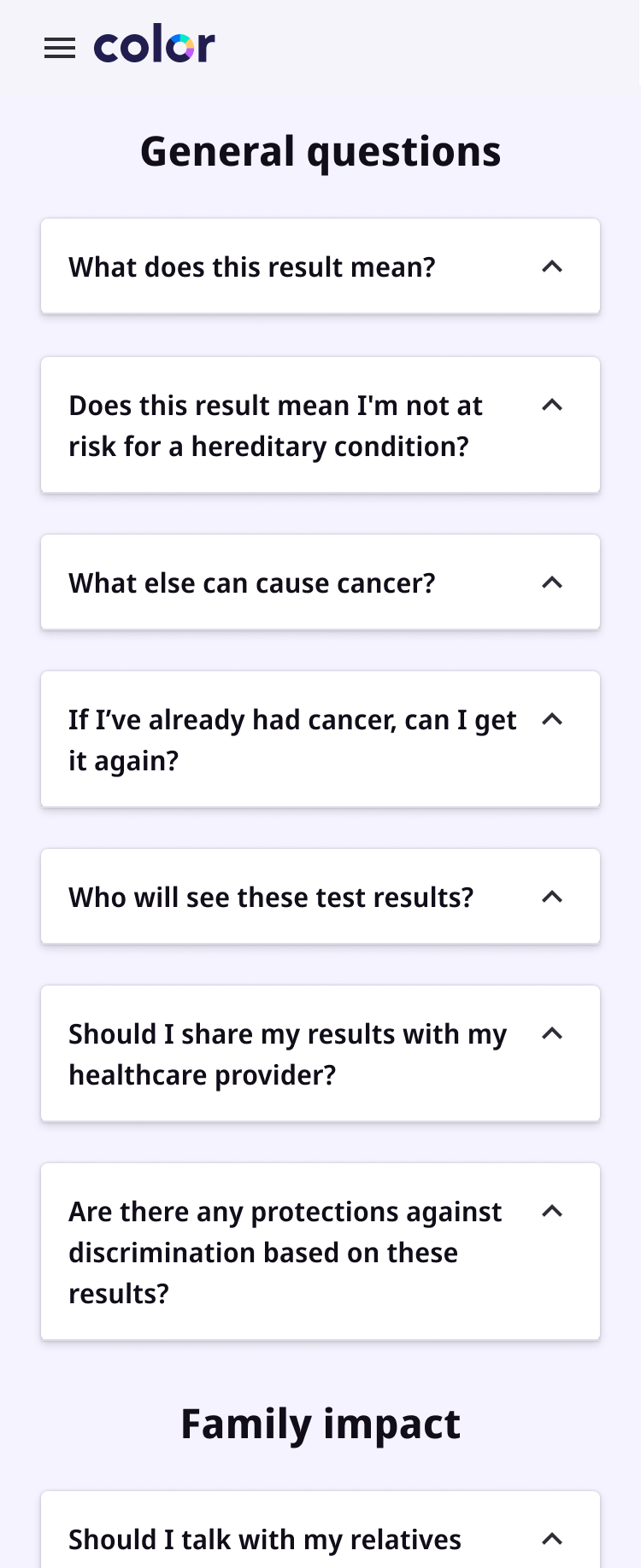
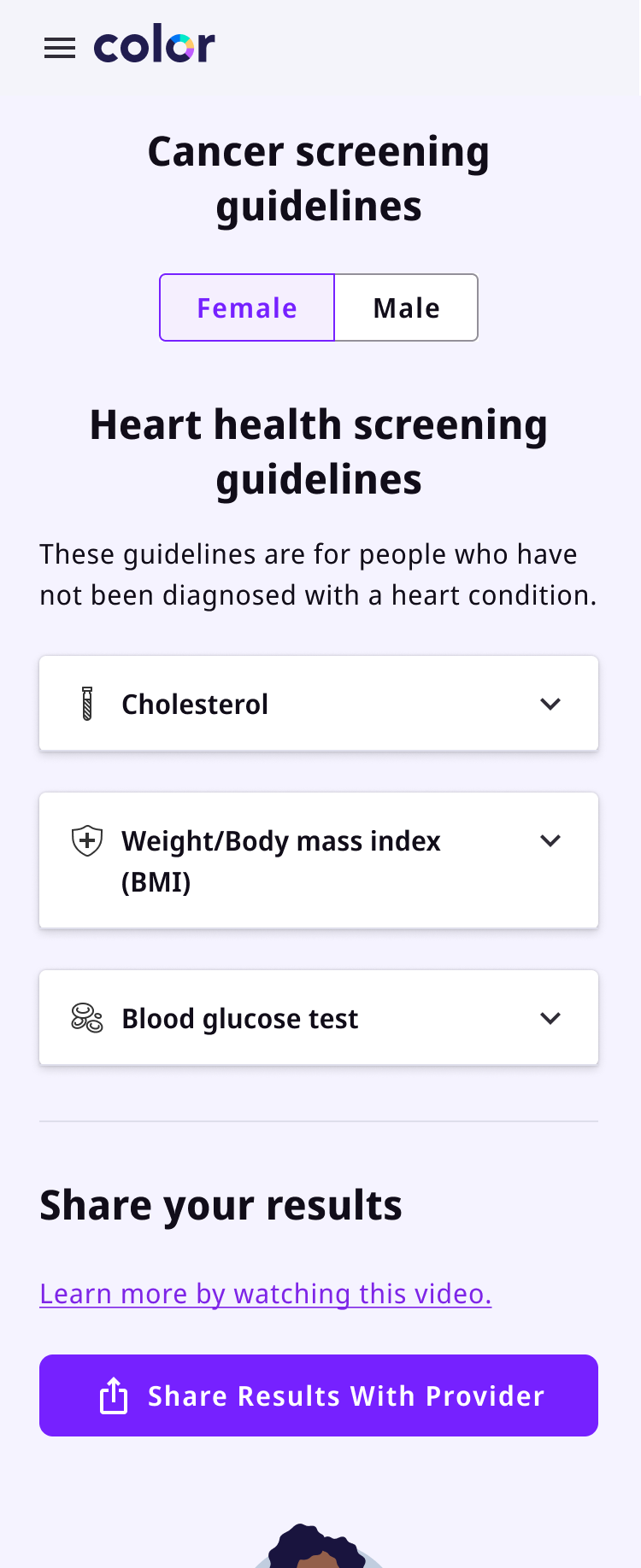
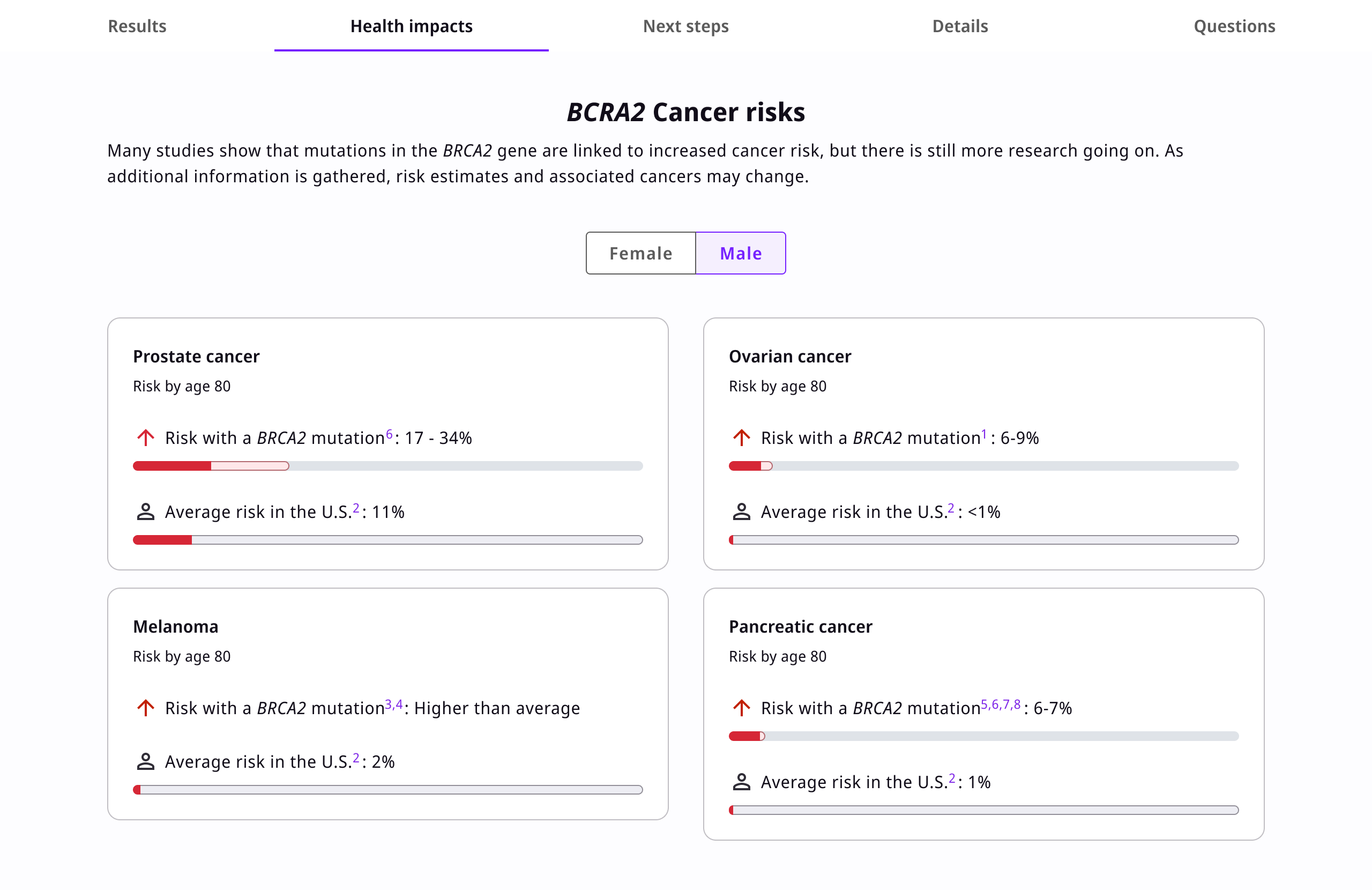
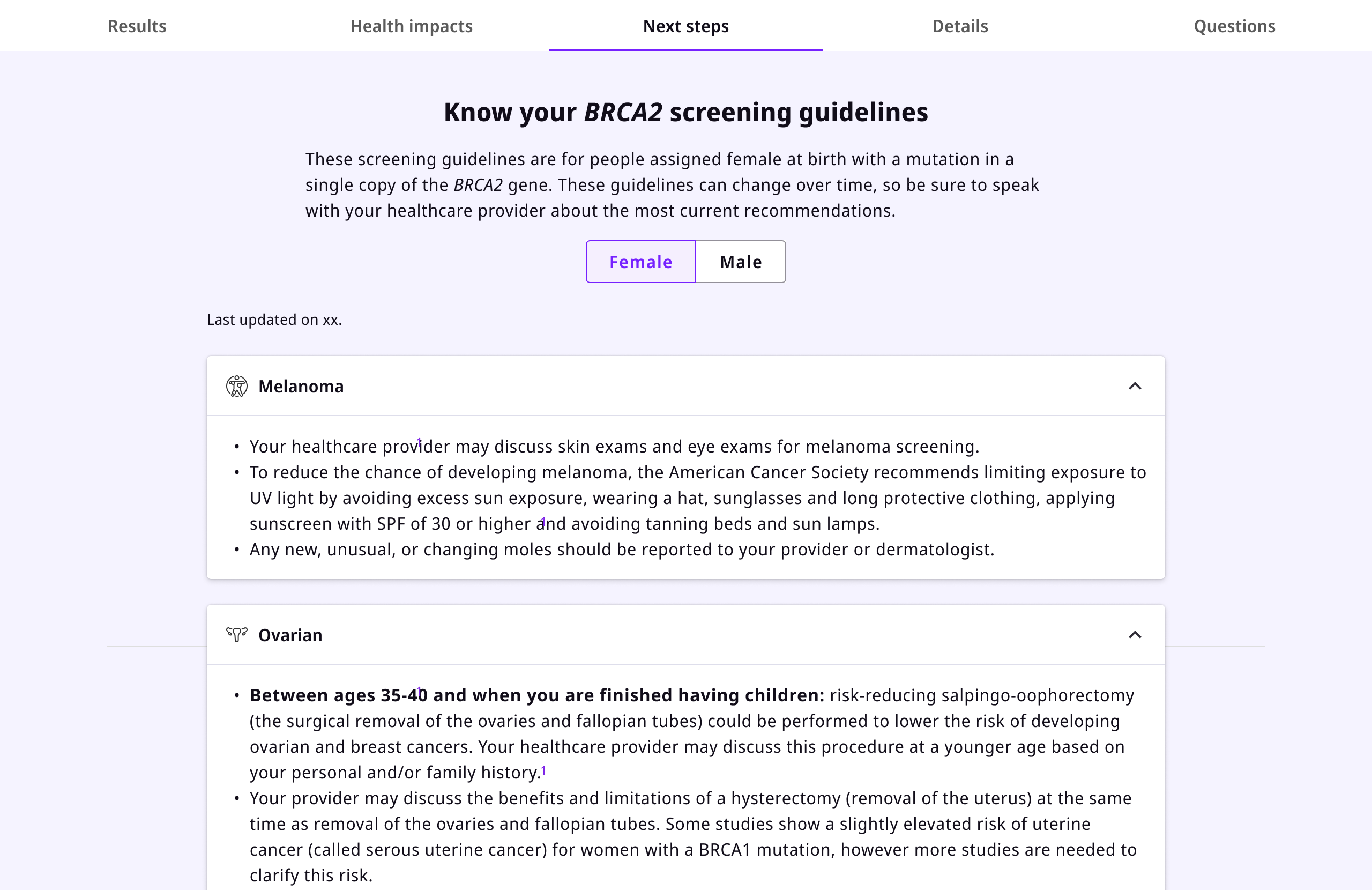
Instead of showing patients everything at once, I designed an accordion-based system that let them control depth. This was a deliberate departure from Color's existing reports and required buy-in from clinical stakeholders who wanted all information visible.

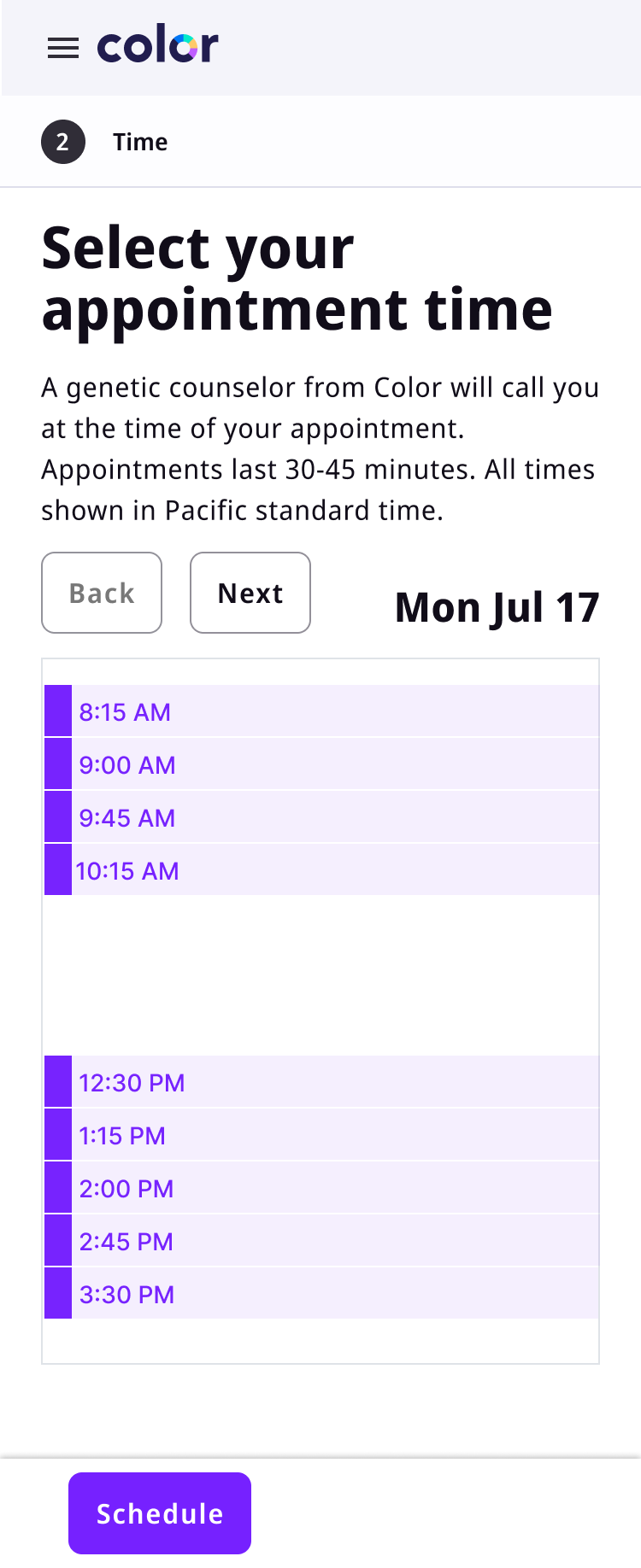
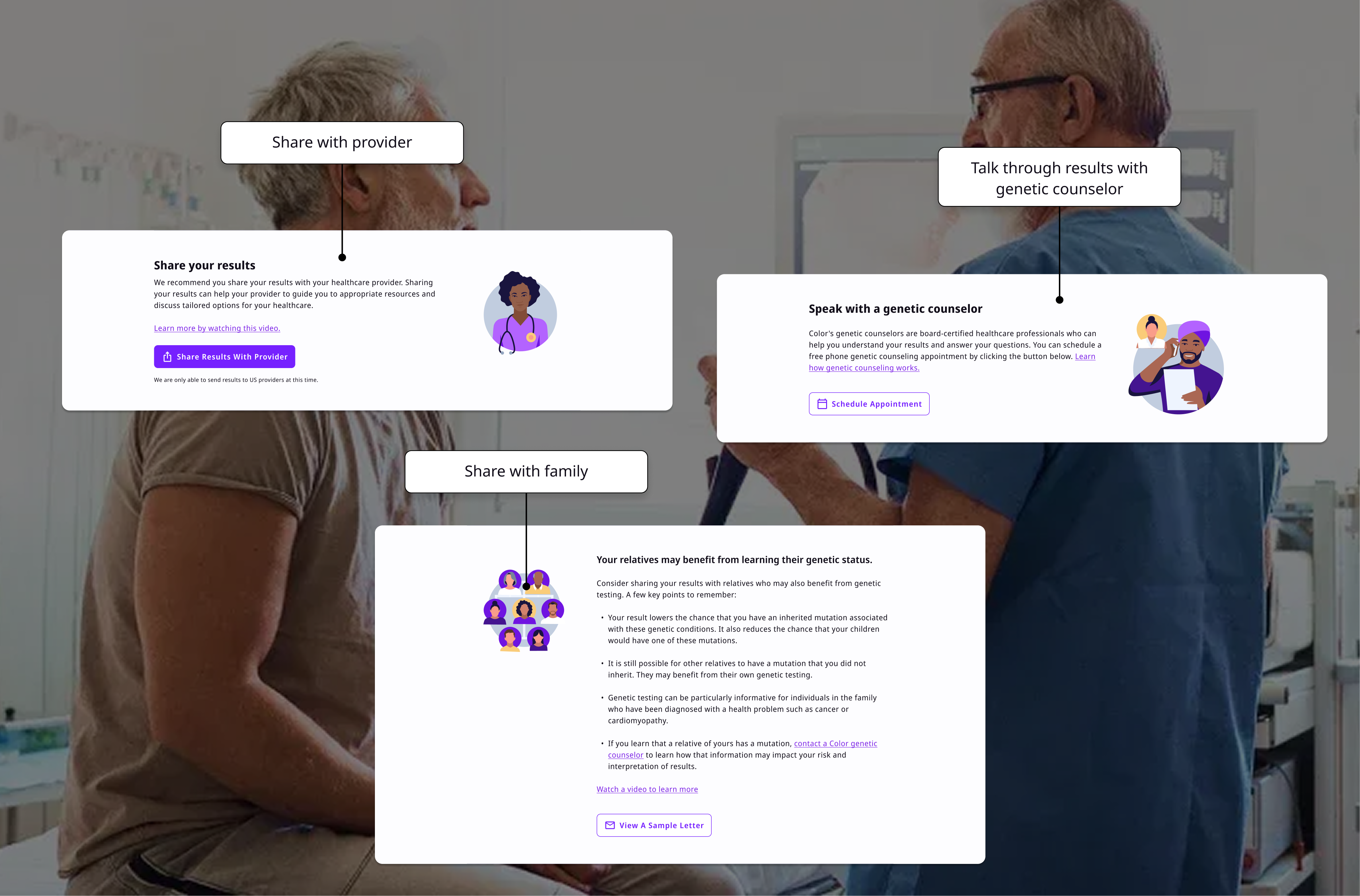
Every section of the report had to answer: 'What can the patient DO with this?' This led to three features: secure provider sharing, family conversation tools, and next-steps guidance.
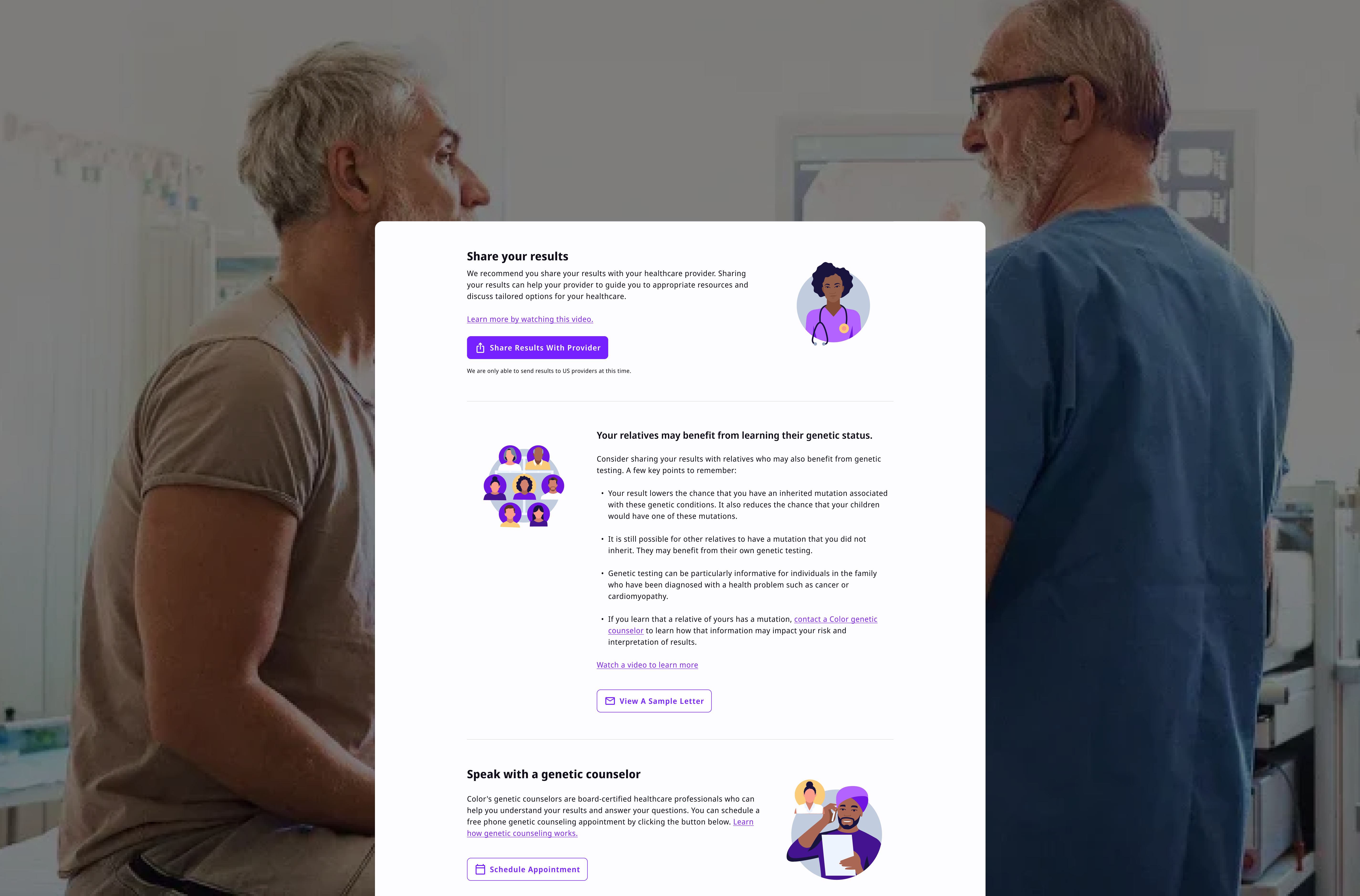
I spent hours restructuring the genetic report Information Architecture with genetic couselors, legal teams, and content designer. Constantly iteration the report UI to present this complex information in a digestible manner.

Every section of the report had to answer: 'What can the patient DO with this?' This led to three features: secure provider sharing, family conversation tools, and next-steps guidance.
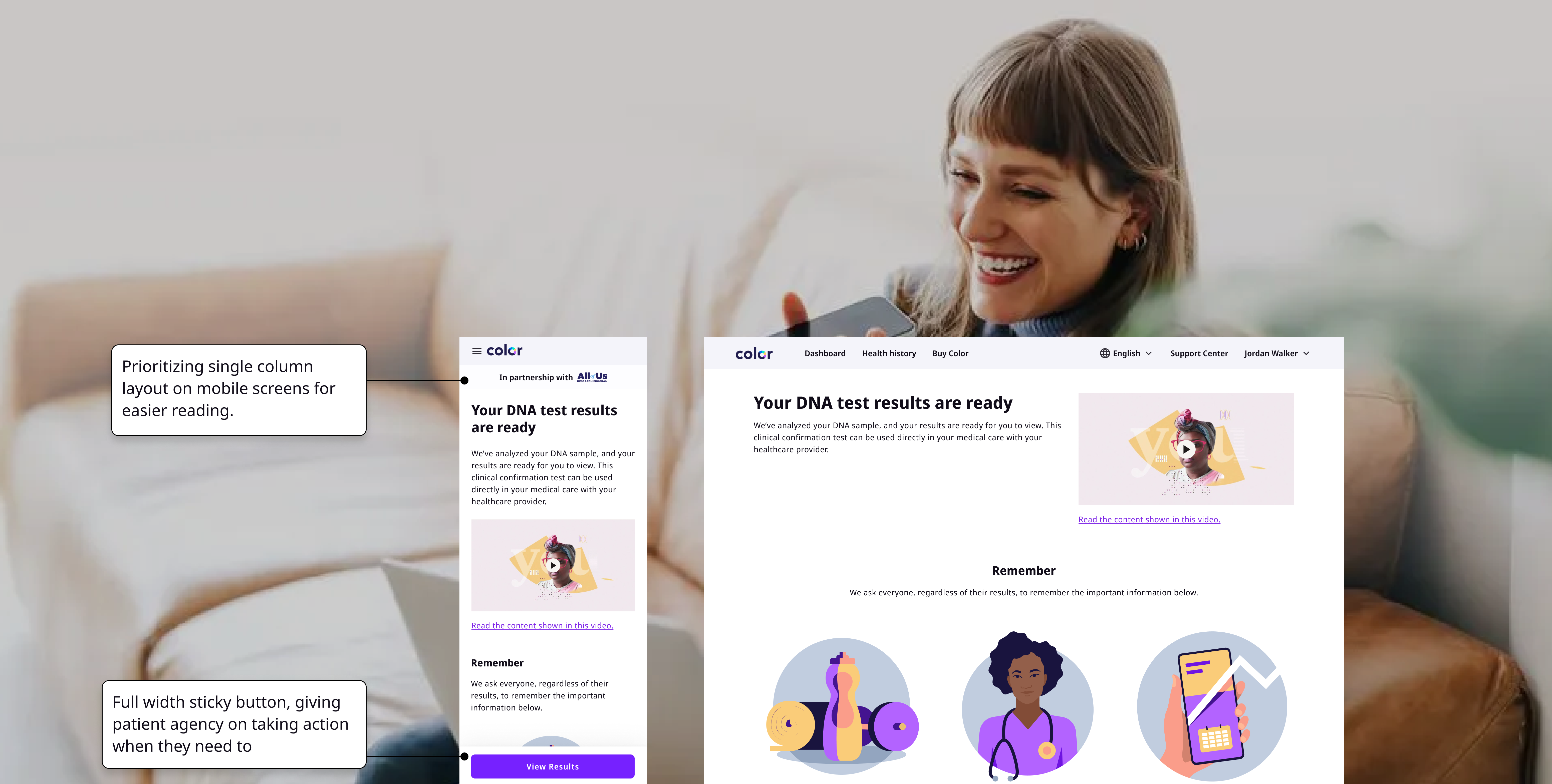
In working closely with our user research team, I got a deep understanding of what our patients hoped to do with their results regardless of the outcome. My job was to creatively come up with solutions that would allow patients to take agency of their information and act on it in a HIPPA complaint manner.
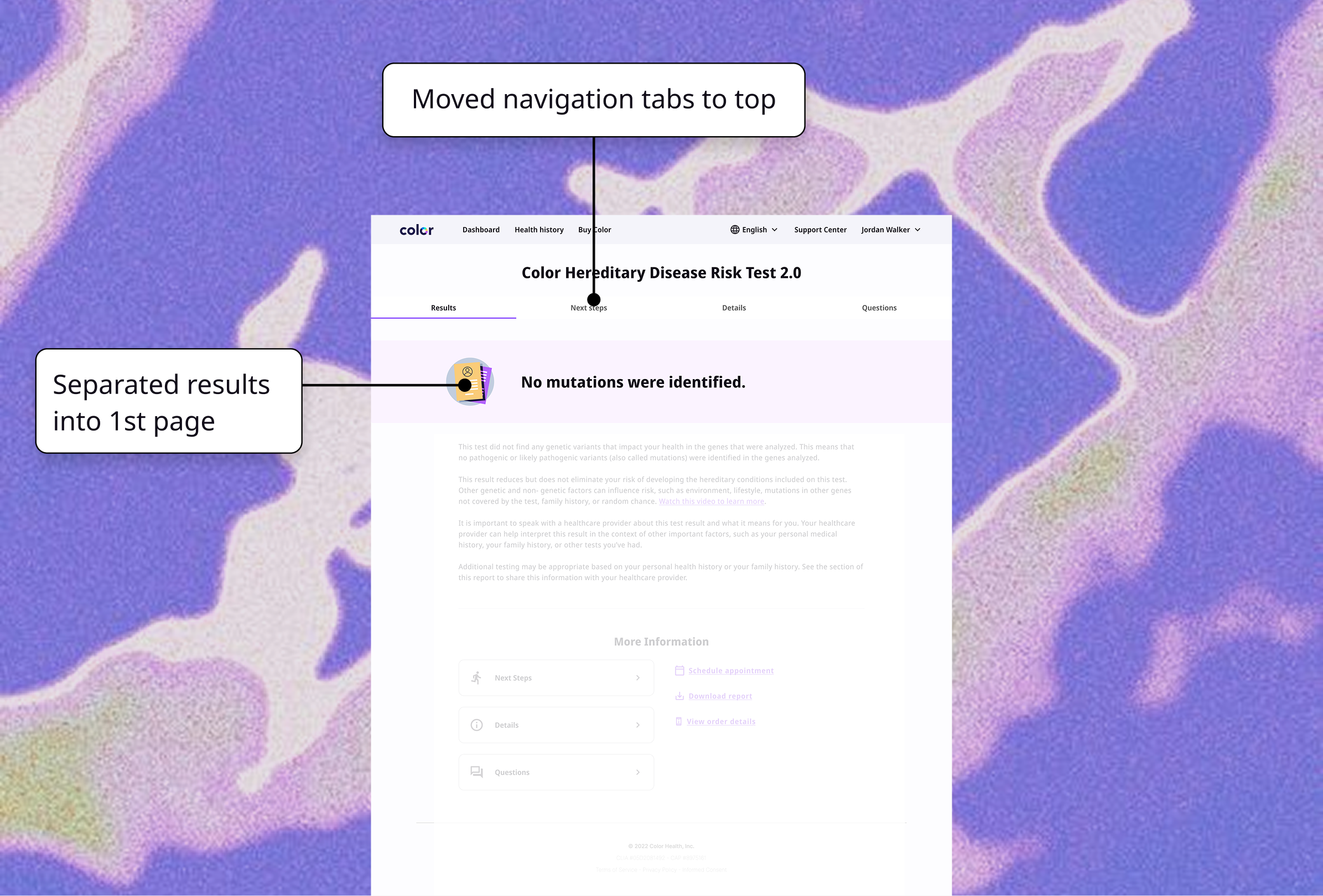
Testing validated improvements across all pain points. But it also revealed something I hadn't anticipated: the information order didn't match how patients actually think about their health. I reordered the categories and moved navigation to the top of the report.

To successfully deliver this product, I had to closely align with our external stakeholders to ensure all edge cases were covered and the product was aligned to their own goals, constraints, & expectations.
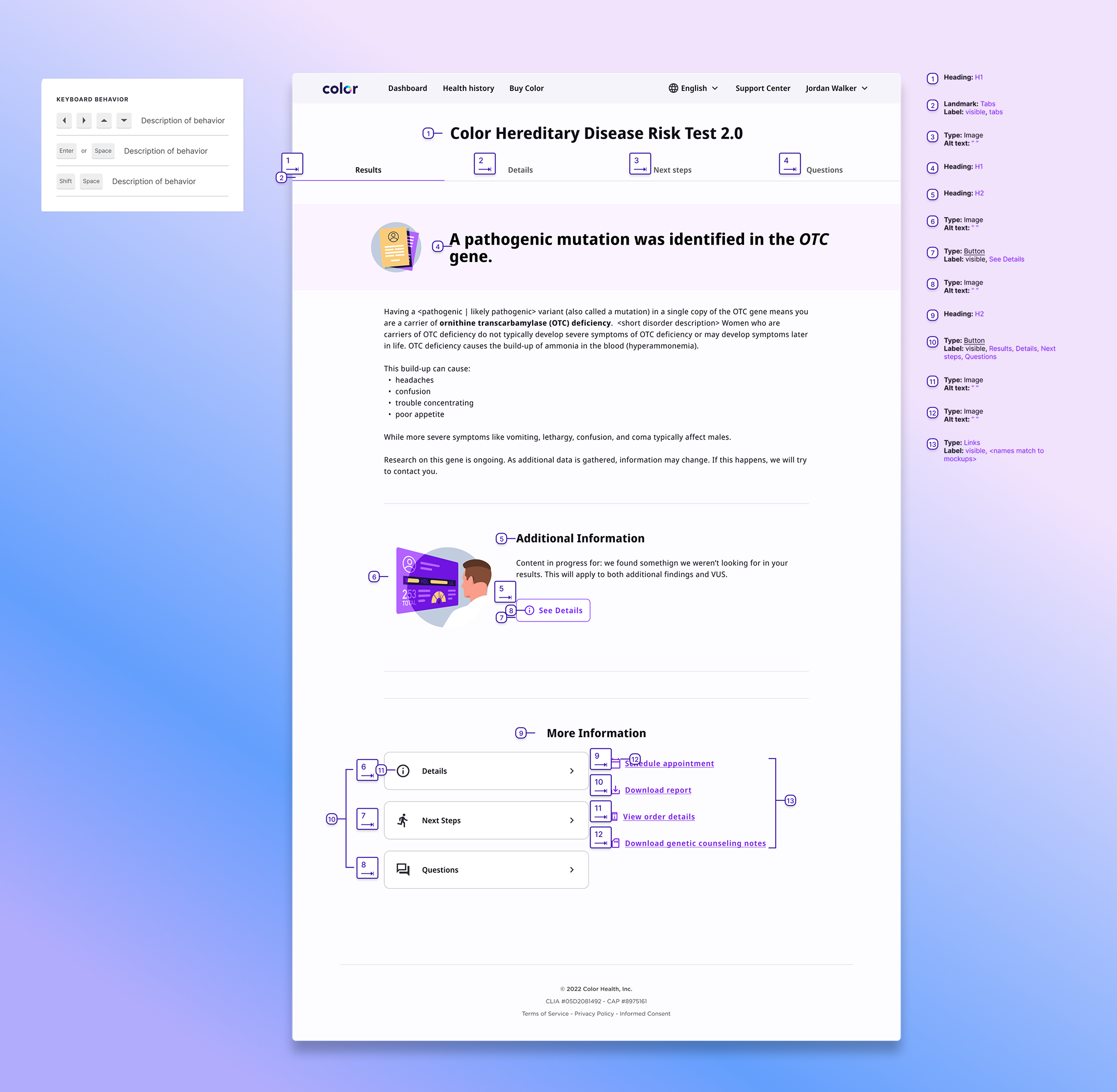
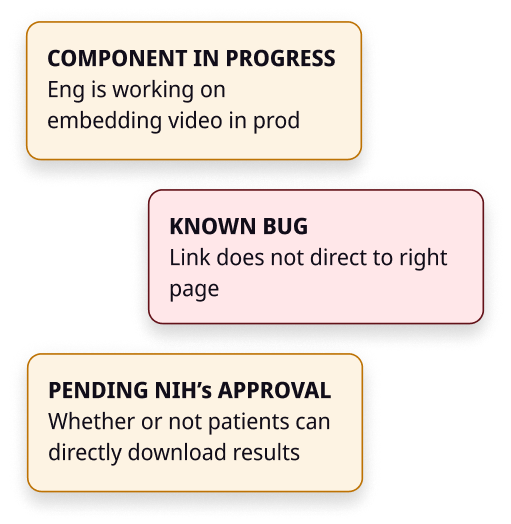
I facilitated a 2-hour walkthrough of the end-to-end experience to resolve any final feedback from our stakeholders & to provide eng clarity on design rationale so they build with full context.

I designed new components to help me better address users needs. I extend our icon library, created tabs, & accordions to break up information into digestible sections. I stressed tested these new components in design critiques to ensure they were useful to other product designers & provided a consistent accessible experience across all our products.
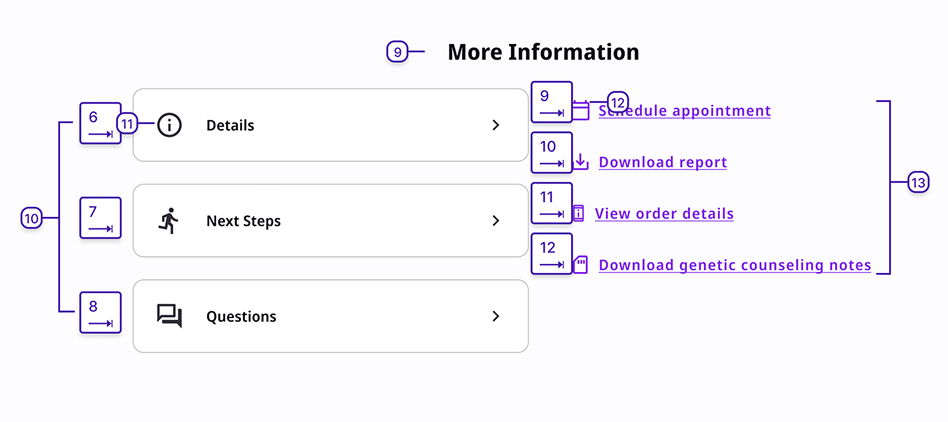
Before handoff, I ensured every visual element met WCAG compliance and documented HTML semantics so the experience transferred properly to assistive technologies. I focused specifically on keyboard navigation and screen reader compatibility, making accessibility a built-in standard rather than a QA afterthought.

in revenue generated during my tenure at Color, continously grew with time.

of participants reviewing results through this product are underrepresented in biomedical research.
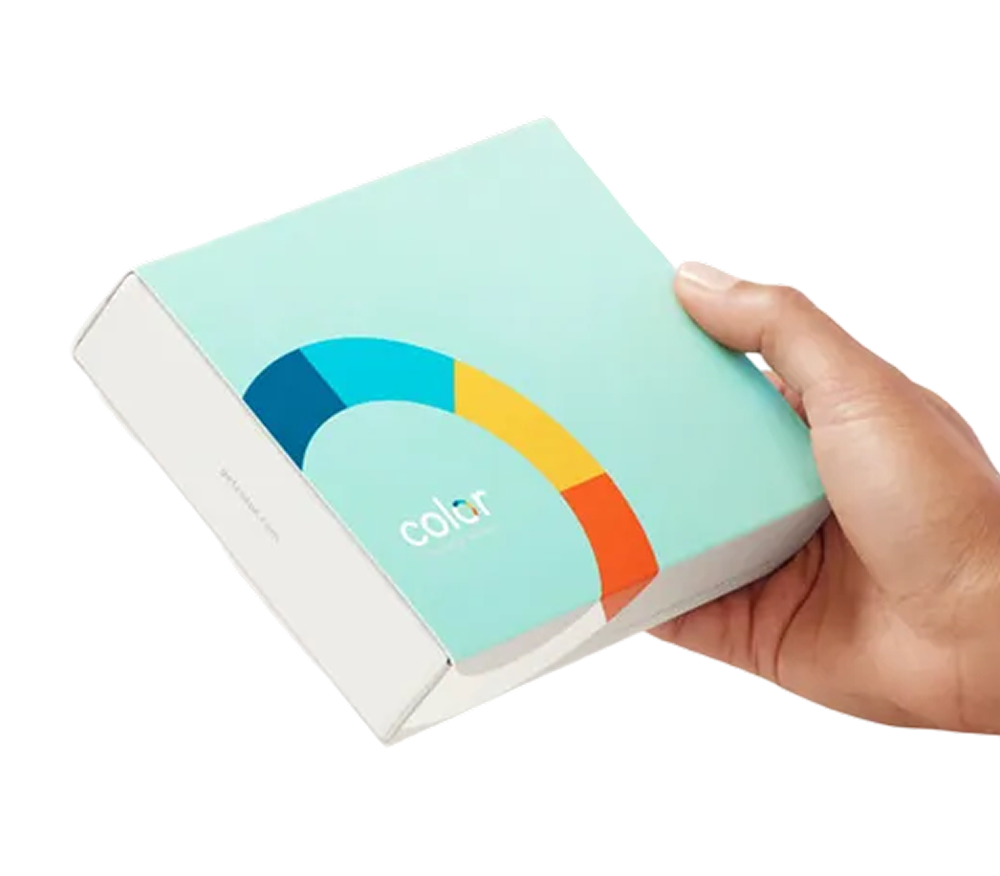
of patients successfully enrolled and viewed their genetic results in the first 4 months of launch of this product.
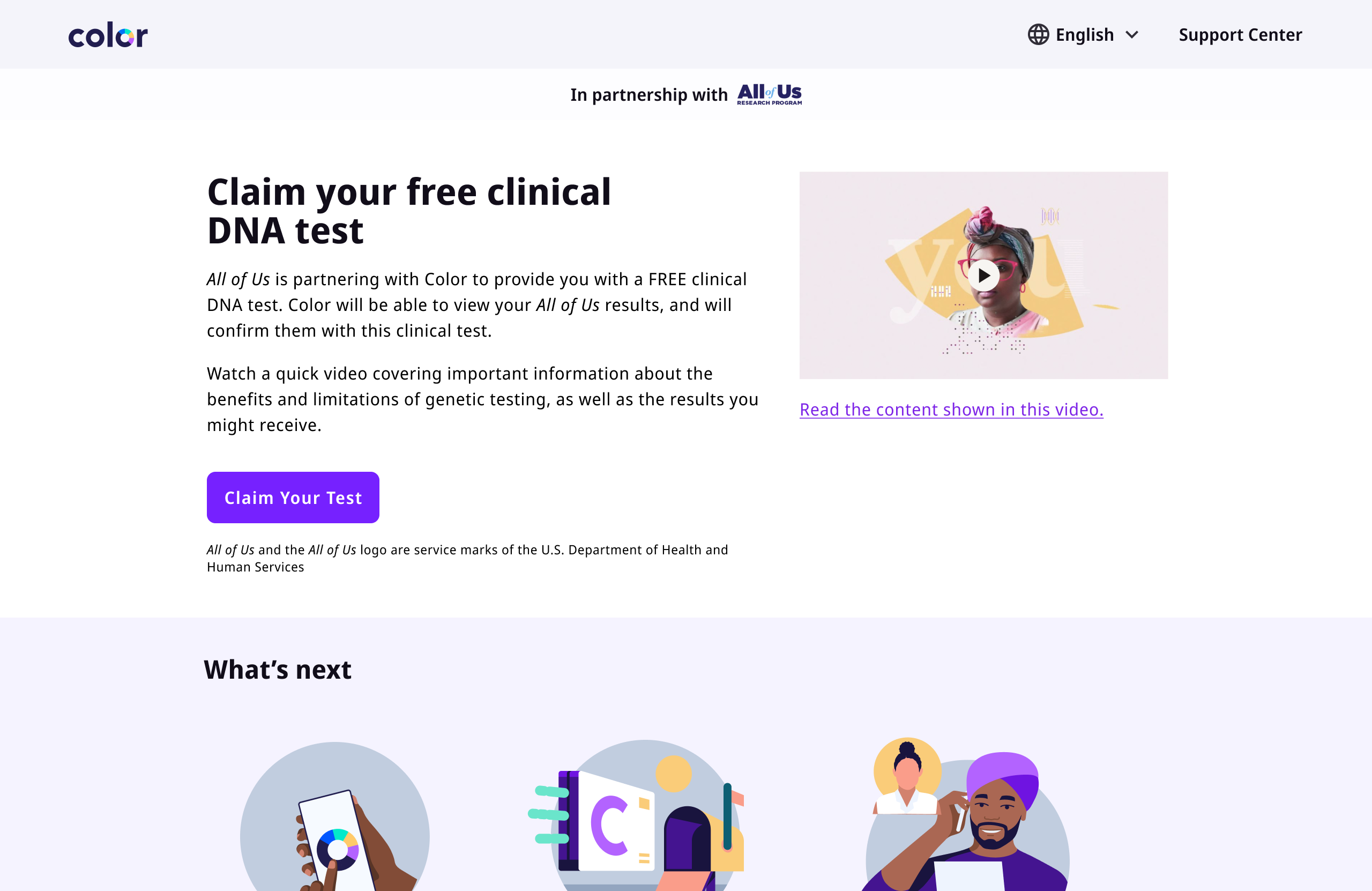
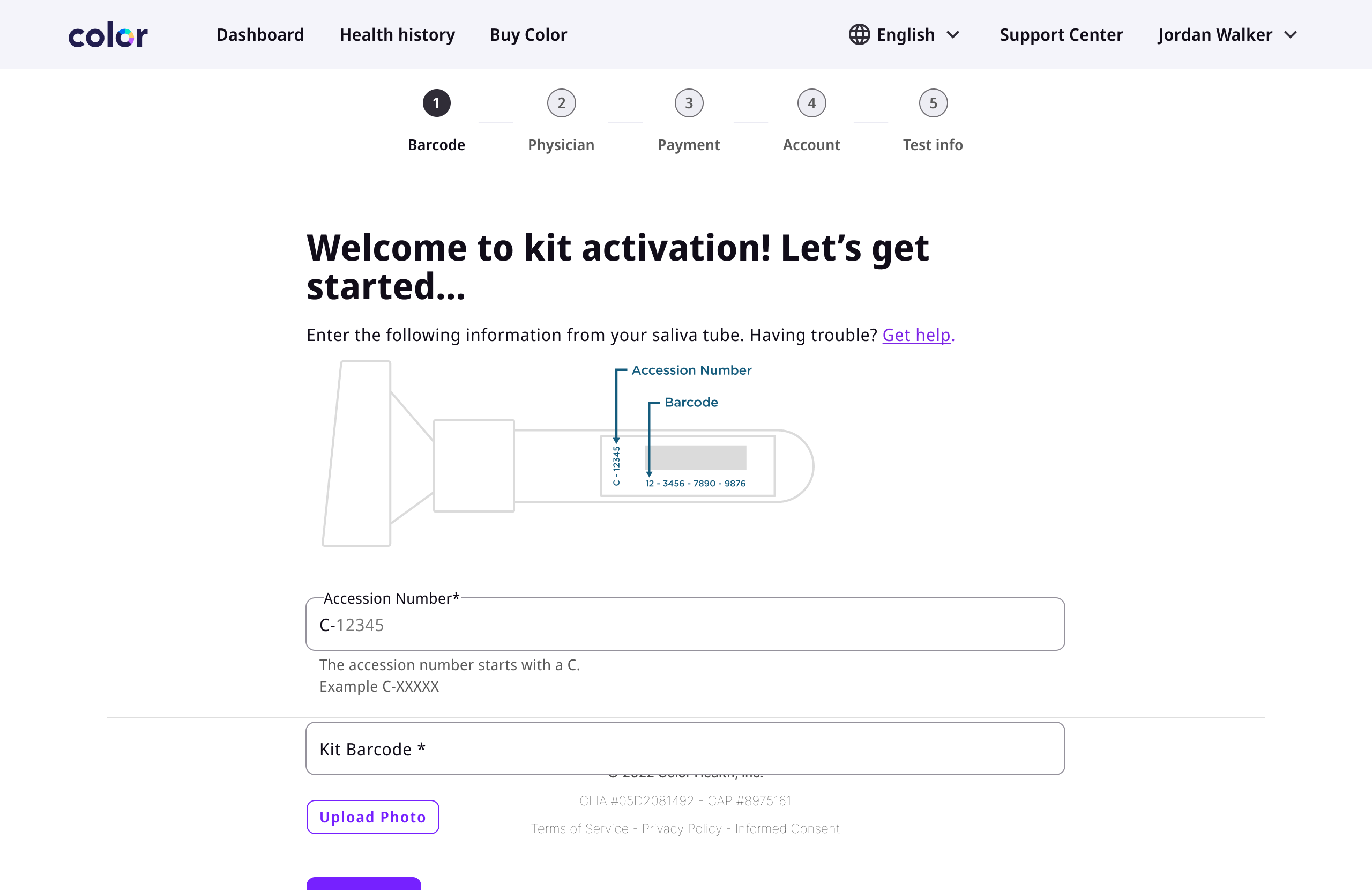
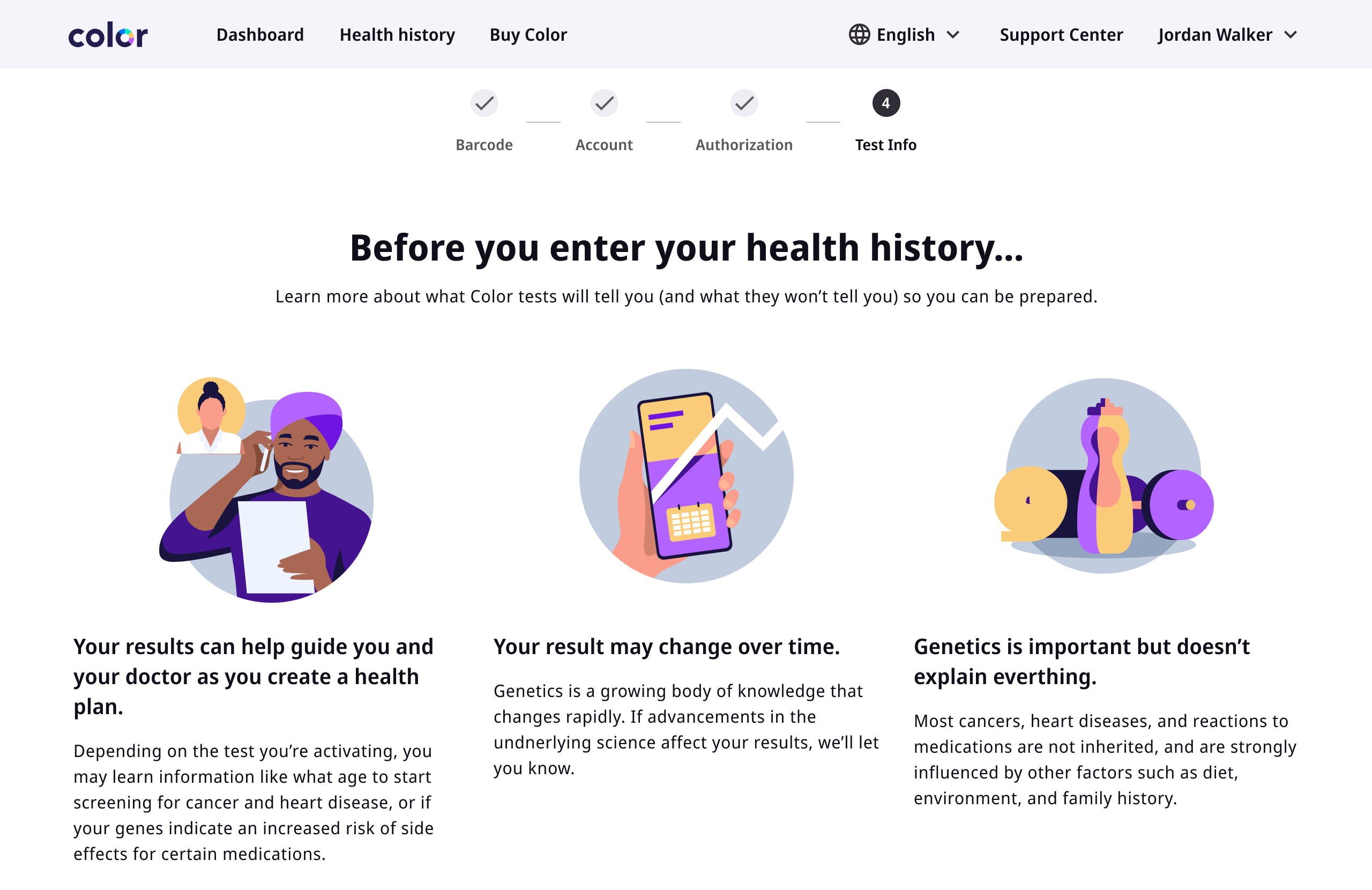
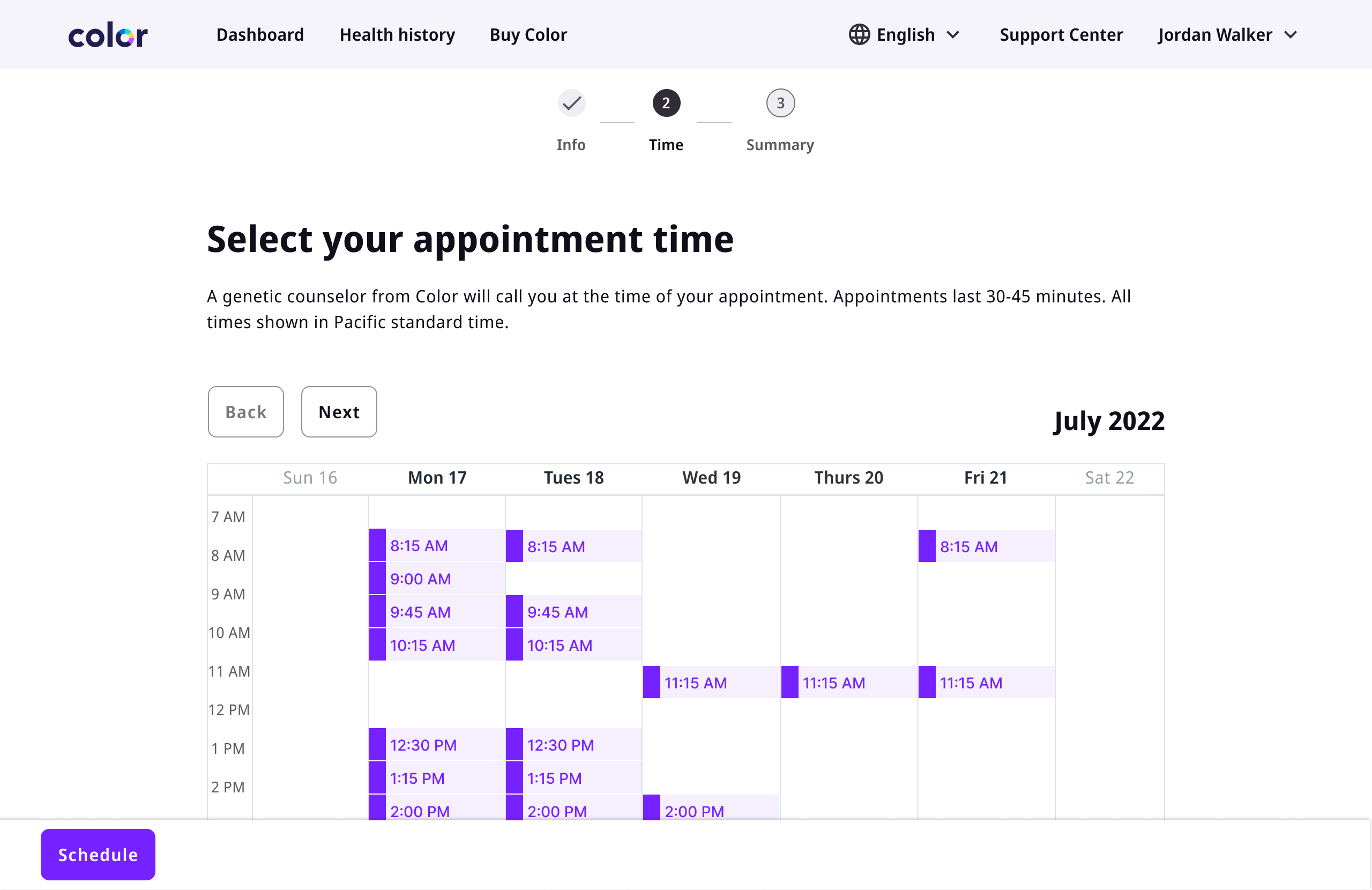
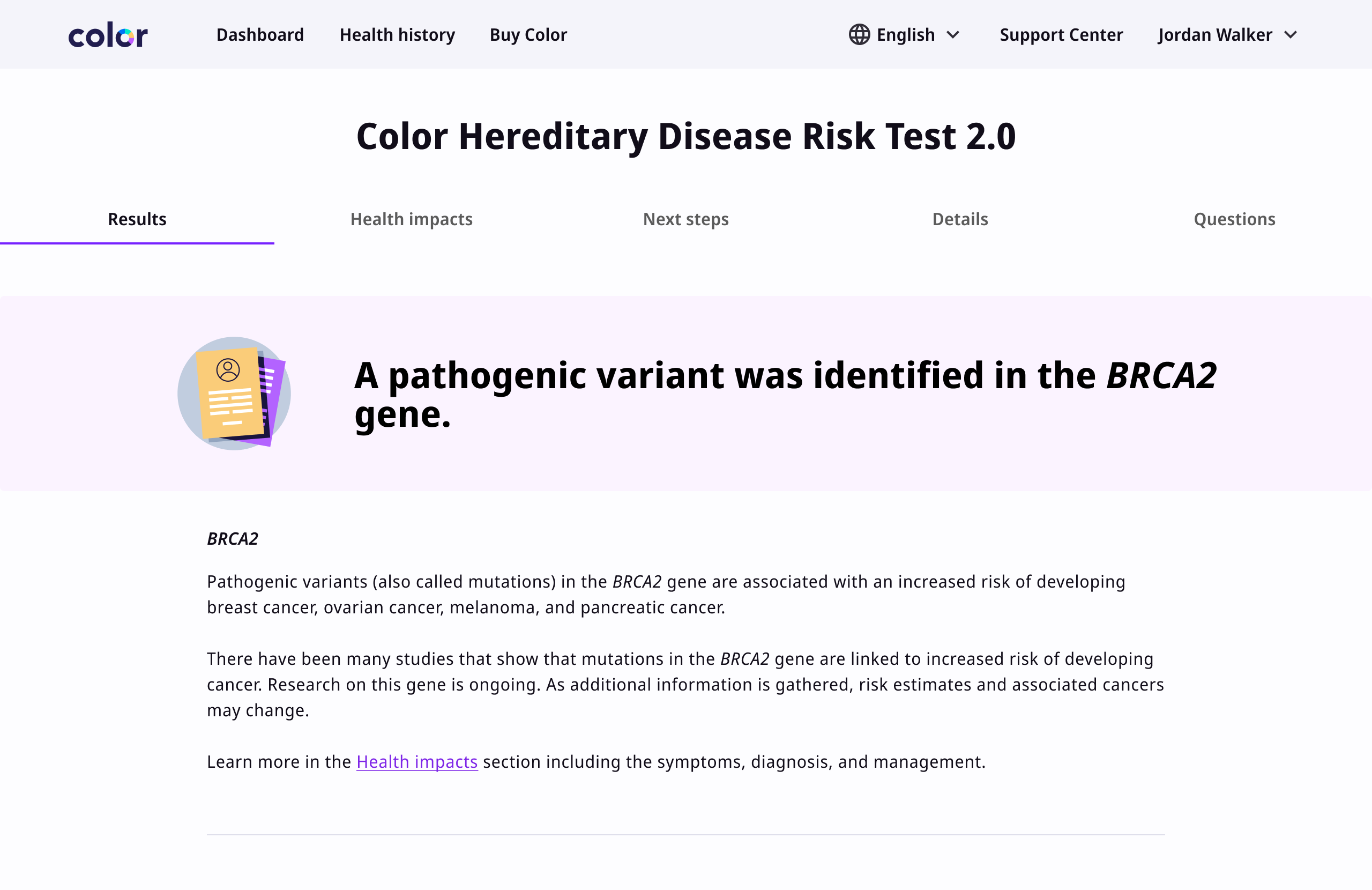
Leading this project from zero to launch shaped how I approach design leadership. Here's what worked and what I'd change:
Building this product from scratch, I brought engineers into design explorations earlier than typical. Understanding engineering constraints upfront prevented costly rework and led to more buildable, innovative solutions.
Leading design across multiple teams and stakeholders, I learned that different partners need different communication channels. I built async and sync feedback loops that kept alignment without creating bottlenecks.
I relied on secondary findings from the All of Us team and clinician interviews. If I could do it again, I would have pushed harder for direct patient research sessions earlier in the process. I also underestimated how long IA alignment would take across two organizations and would build more buffer for that phase. Finally, I wish I had established quantitative success metrics upfront so we could measure report comprehension post-launch.


